
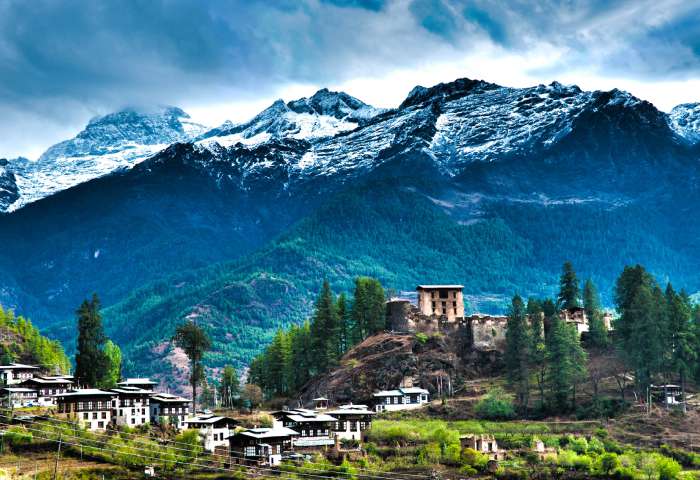
By Road
There are no available bus services between Chennai and Bhutan and thus you must come to Kolkata. From Kolkata you can easily get a bus to Bhutan. It takes 18 hours to reach Phuentsholing from Kolkata. You can also opt for the bus, private taxi or any other local transportation in order to reach Bhutan.
By Train
Again there is o direct train route between Chennai and Bhutan, hence convenient options are New Alipurduar, Siliguri, New Jalpaiguri and Hasimara. Once you reach Jaigaon you can avail a taxi/cab to reach Bhutan.
By Air
Paro International airport is the only airport of Bhutan. Druk Air is the only airline which operates regular flights to and from Paro to Gaya, Bangkok, Kathmandu, Dhaka, Kolkata and Delhi. Unfortunately there are no direct flights from Chennai to Bhutan and hence first you can travel to Kolkata or Delhi and then fly to Bhutan.
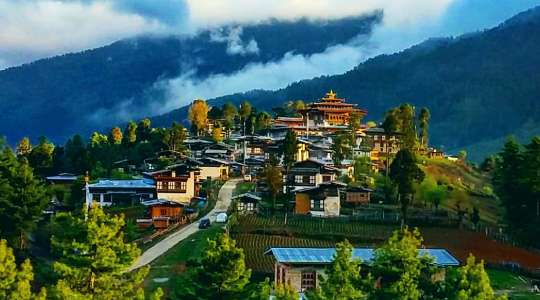
Chendbji Chorten
Approximate four hours drive from Wangduephodrang is Chendbji Chorten, patterned on Swayambhunath temple in Kathmandu. It was built in 18th century by Lama Shida, from Tibet, to cover the remains of an evil spirit that was subdued at this spot.
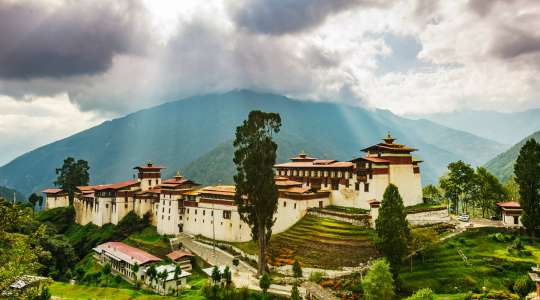
Trongsa Dzong
Like almost all towns in the Kingdom, this Dzong architecture dominates the entire Trongsa horizon dwarfing the surrounding buildings. Built in 1648, it was the seat of power over central and eastern Bhutan. Both the first and second King ruled the country from this ancient seat.
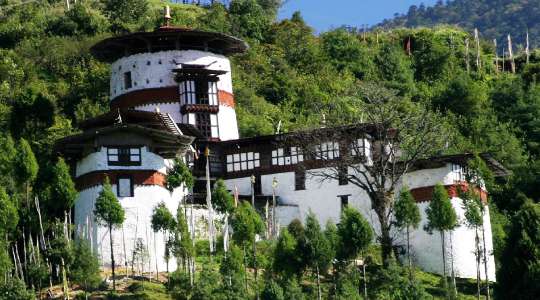
Ta Dzong
The Ta Dzong, a cylindrical stone structure rising five storeys, was built in 1652 by ChogyalMinjurTempa, a task entrusted to him by ZhabdrungNgawang Namgyal. After more than 350 years, it has been resurrected into a classy museum, that represents a tasteful blend of tradition and modernity.