
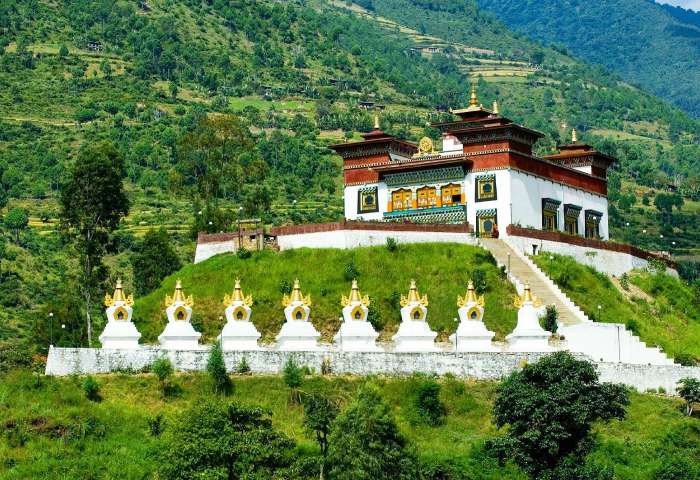
By Road
There are no available bus services between Chennai and Bhutan and thus you must come to Kolkata. From Kolkata you can easily get a bus to Bhutan. It takes 18 hours to reach Phuentsholing from Kolkata. You can also opt for the bus, private taxi or any other local transportation in order to reach Bhutan.
By Train
Again there is o direct train route between Chennai and Bhutan, hence convenient options are New Alipurduar, Siliguri, New Jalpaiguri and Hasimara. Once you reach Jaigaon you can avail a taxi/cab to reach Bhutan.
By Air
Paro International airport is the only airport of Bhutan. Druk Air is the only airline which operates regular flights to and from Paro to Gaya, Bangkok, Kathmandu, Dhaka, Kolkata and Delhi. Unfortunately there are no direct flights from Chennai to Bhutan and hence first you can travel to Kolkata or Delhi and then fly to Bhutan.
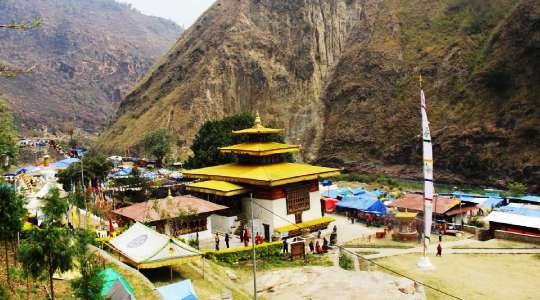
Gom Kora
Twenty four km from Trashigang, the Gom Kora temple is set on a small alluvial plain overlooking the river. Surrounded by rice fields and clumps of banana trees, it looks like an oasis in an arid landscape. It is one of the famous places where Guru Rinpoche meditated in order to subdue a demon that dwelt in a huge black rock.
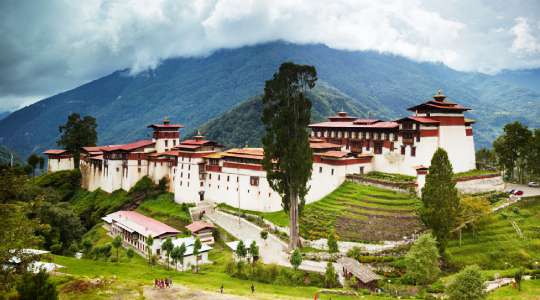
Trashigang Dzong
Trashigang Dzong: Built in 1659, the dzong serves as the administrative seat for the district as well as the home of the monk body. The dzong commands a remarkable view over the surrounding countryside. This dzong is unusual because both the administrative and monastic bodies face a single courtyard.